

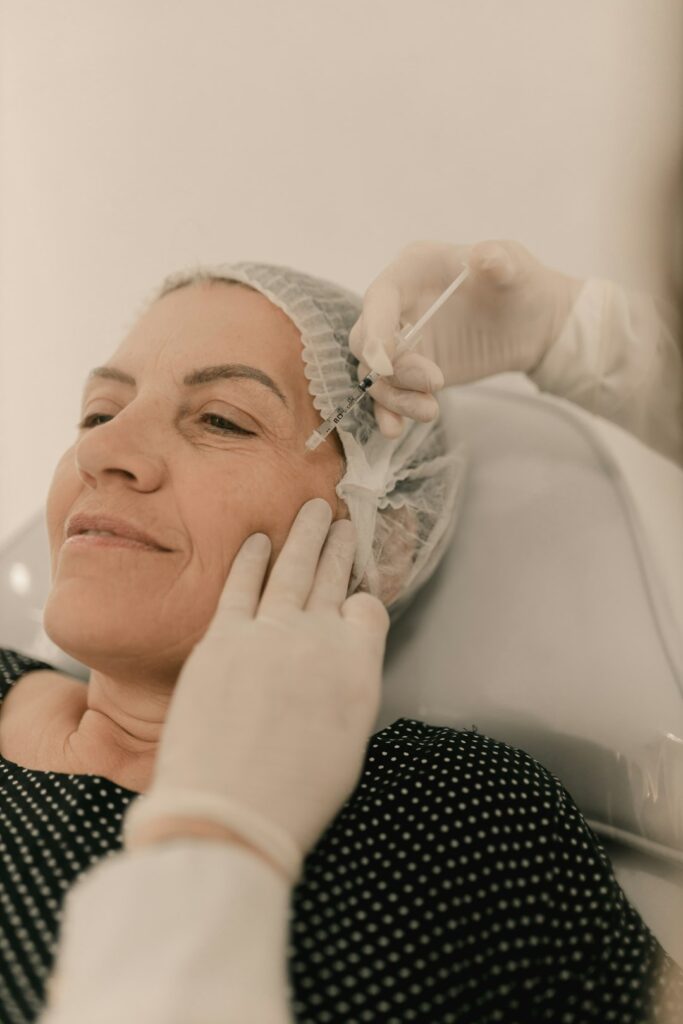
What does facial volume loss look like?
Facial volume loss may show up as flatter cheeks, deeper folds around the nose and mouth, thinner lips, hollowing beneath the eyes, or a less defined jawline. These changes are a normal part of aging and can become more noticeable as the skin becomes thinner and the underlying fat and bone structure gradually change.
Dermal fillers may be worth considering when the main concern is loss of fullness or contour, rather than only surface wrinkles. They are injectable materials placed beneath or within the skin to add volume, soften certain depressions, or improve facial proportions.
The goal should be a refreshed appearance that still looks like the same person—not maximum fullness.
When are dermal fillers a reasonable option?
Fillers may be appropriate when:
- A specific area appears flatter or more hollow than it used to
- Facial folds are partly caused by decreased support beneath the skin
- The desired change is subtle and localized
- A person understands that results are temporary or may require maintenance
- Expectations are realistic about what injections can and cannot correct
For example, cheek volume loss can contribute to a tired appearance and may deepen folds lower on the face. Restoring a modest amount of support in the cheek area may improve overall balance without directly filling every line.
Fillers can also be used for lips, chin, jawline contours, and selected areas around the mouth. Treatment near the eyes requires particular caution because the anatomy is complex and not every type of hollowing is best treated with filler.
Is age the main factor?
No. There is no single age at which someone should begin using fillers. The more useful question is whether a specific concern is caused by volume loss and whether the person is comfortable with the risks, cost, maintenance, and uncertainty involved.
Some adults notice meaningful changes in their 30s or 40s, while others do not feel bothered until later. Genetics, sun exposure, weight changes, smoking, hormonal changes, and facial structure all influence how aging appears.
In Meridian, dry air, seasonal temperature swings, and regular outdoor exposure can contribute to skin dryness and sun-related changes. However, dryness and fine lines do not automatically mean that filler is needed. Moisturizing, sun protection, and treatment for skin texture may be more suitable if the primary issue is surface quality rather than lost volume.
What problems can fillers improve—and what can they not fix?
Dermal fillers can improve selected forms of:
- Mild to moderate hollowing
- Flattened cheeks or temples
- Thin or uneven lips
- Certain facial folds
- Loss of chin or jawline definition
- Some recessed scars
They do not remove loose skin, repair significant muscle movement, or fully correct every wrinkle. They also cannot reliably reverse all changes associated with aging, such as pronounced jowling, extensive skin laxity, or severe under-eye bags.
A common misconception is that every wrinkle should be filled directly. In some cases, placing too much material into a line can create puffiness without addressing the underlying structural change. A careful assessment should consider skin quality, muscle movement, facial proportions, and the distribution of volume loss.
How should someone decide whether the timing is right?
Consider the decision from several angles rather than focusing only on a mirror or photograph.
The concern: Is the change consistent over time, or could it be related to recent weight loss, illness, dehydration, or temporary swelling?
The goal: Is the desired result modest and specific? “I want to look less hollow under my eyes” is more practical than expecting a complete return to a younger appearance.
The maintenance: Most fillers gradually break down or become less noticeable. The timing varies by product, area treated, metabolism, facial movement, and the amount injected. Choosing filler means accepting that future treatment may be needed to maintain the effect—or that the result will gradually fade if no additional treatment is performed.
The occasion: Swelling and bruising can occur, even when the procedure is uncomplicated. Avoid planning an initial treatment immediately before a wedding, major trip, professional photography, or another important event.

The medical history: Previous filler, implants, dental procedures, allergies, bleeding problems, skin conditions, autoimmune disease, and medications or supplements that affect bleeding should all be discussed before treatment.
What are the main safety concerns?
Dermal fillers are medical procedures, not ordinary skincare products. Common short-term effects include redness, tenderness, swelling, bruising, itching, and firmness at the injection site. These effects often improve over several days, although the exact recovery period differs by person and treatment area.
Rare complications can be serious. If filler is accidentally injected into a blood vessel, it can restrict blood flow and cause tissue injury, vision problems, or stroke. Infection, nodules, allergic reactions, migration of material, and delayed inflammation are also possible.
For that reason, injections should be performed only by a licensed medical provider who is trained in facial anatomy, uses approved products for appropriate indications, and has a plan for recognizing and managing complications. Non-medical settings, informal injections, and products obtained through unverified sources create avoidable safety concerns.
Sudden severe pain, pale or mottled skin, unusual skin discoloration, vision changes, or neurological symptoms after an injection require urgent medical attention.
What questions should be answered before treatment?
A consultation should clarify more than the product name. Useful questions include:
- What specific type of volume loss is being treated?
- Why is this filler being considered instead of skincare, botulinum toxin, energy-based treatment, or surgery?
- Is the intended use approved for that area?
- How much product is recommended, and why?
- What should be expected immediately, after one week, and after several months?
- What are the common and rare complications?
- What happens if the result is uneven or the material needs to be reduced?
- How might previous filler, dental work, illness, or medication affect the plan?
It is also reasonable to ask whether a conservative first treatment would be safer than trying to correct several areas at once. Gradual changes are often easier to evaluate and less likely to produce an overfilled appearance.
When might fillers not be the best choice?
Fillers may not be a good fit when expectations are unrealistic, the concern is mainly loose skin or poor skin texture, there is active infection or significant inflammation, or the person feels pressured to treat several areas at once.
They may also be inappropriate when a person is uncertain about the procedure but hopes the treatment will solve broader concerns about aging or self-image. A pause can be useful. Looking at photographs taken in consistent lighting, identifying the exact change that feels bothersome, and considering non-injectable options may lead to a clearer decision.
For residents considering treatment in a dry, sunny climate, daily broad-spectrum sunscreen, protective clothing, and consistent moisturization remain useful regardless of whether fillers are chosen. These measures support skin health but do not replace evaluation of true structural volume loss.
The most sensible time to consider dermal fillers is when the concern is specific, the expected improvement is realistic, the person understands the temporary nature and risks, and the decision is made without pressure.